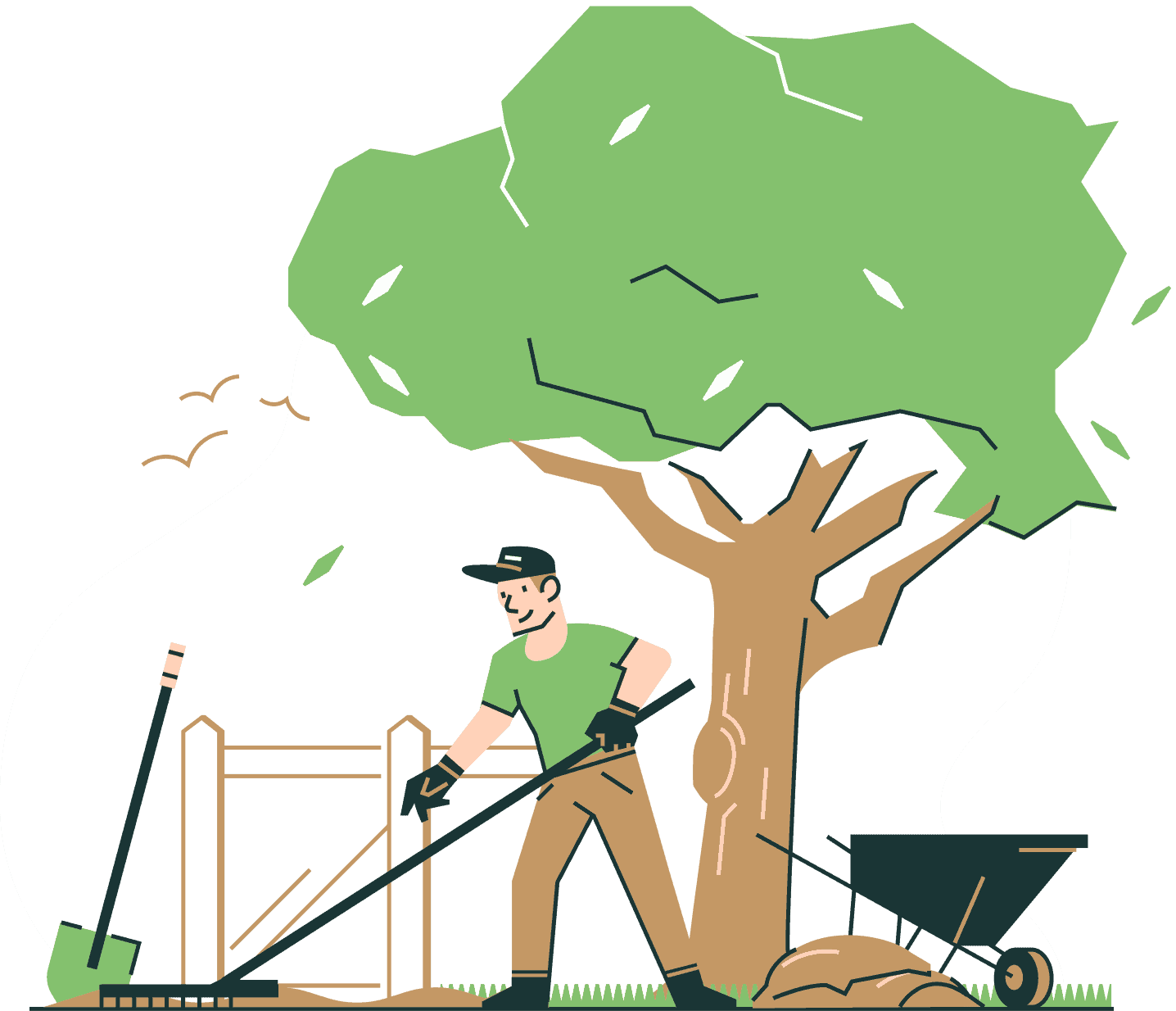

What Exactly is a Lawn Leveling Rake?
It is not your garden-variety rake. This specialized tool is designed to smooth out bumps and dips in your lawn. Think of it as a giant squeegee for your grass.
Key features:
- Handle: Long and sturdy, often with a comfort grip (typically 5-6 feet)
- Head: Wide and flat, usually 24-36 inches across
- Weight: Heavier than a standard rake — the weight does the work
How to Use It
1. Prep your lawn Mow short and water lightly the day before.
2. Prepare your mix A 50/50 blend of sand and topsoil is the gold standard for most lawns.
3. Apply the mix Spread no more than 1/2 inch at a time. Never smother the grass.
4. Rake in smooth strokes Work in overlapping passes. Light pressure, let the rake do the work.
5. Water to settle A light watering helps the mix work down through the grass blades.
Common Mistakes and How to Avoid Them
Uneven spreading: Use lighter pressure and overlapping passes
Material clumping: Make sure your mix is not too wet before applying
Damage to grass: Do not press too hard — the rake weight is enough
DIY vs Professional
While a lawn leveling rake is great for maintenance and minor corrections, some situations genuinely call for professional help:
- Large areas needing significant grade changes
- Persistent drainage issues
- Lawns that need soil testing and custom mix recommendations
Pro tip: Do not apply more than 1-2 cm of mix at a time to avoid smothering your grass.
FAQ
How often should I level my lawn? Once a year is usually enough unless you have major issues.
Can I use sand for leveling? Yes, but a mix of sand and topsoil often works best.
How long until I see results? You will see improvement immediately, but full results take a few weeks as grass grows through.